A mobile platform that replaces status-driven noise with goal-driven dialogue — for niche professional communities.


The problem
More users, not more relevant ones
Broad platforms like LinkedIn are made to connect as many people as possible, not the right people - leaving niche professionals buried in irrelevant contacts and generic recommendations. Without smart targeting, a big user base creates noise, not real collaborators who share the same goals.
Objective
Synexia aims to solve this by offering a focused, mobile-first platform tailored to niche industry needs. By curating valuable contacts, events, and mentorship opportunities, it empowers users to form meaningful, impactful relationships—without sifting through endless, irrelevant profiles or discussions.
Discover
User Research
I interviewed 5 mid-level professionals in fintech and biotech, who frequently attend industry conferences and rely on professional networking apps.
My goals were to explore their networking habits, frustrations and desired improvements.
Empathy Map
“I get 15 connection requests a day — most are recruiters or ‘Let’s connect!’ with zero context.”
“I want to talk to someone who’s actually built a payment gateway or fought fraud — not another ‘growth hacker.’”
Opens LinkedIn, scrolls 30 seconds, closes. Swaps 10 cards at a meetup, follows up with one. Archives 9 of 10 inbound messages.
Overwhelmed by recruiters and vendors. Frustrated by low response rates and connections that go nowhere.
Competitive Analysis
Key Takeaways and Understandings
Platforms like LinkedIn offer large-scale networking but often lack relevance, making it hard for users to form meaningful connections.
Apps like Tinder and Bumble streamline the process of meeting new people with clear intent - a concept that could make professional networking more efficient.
Successful platforms foster trust through strong user profiles, shared interests, and structured conversation starters, making interactions feel more natural.
Platforms like LinkedIn offer large-scale networking but often lack relevance, making it hard for users to form meaningful connections.
Apps like Tinder and Bumble streamline the process of meeting new people with clear intent - a concept that could make professional networking more efficient.
Successful platforms foster trust through strong user profiles, shared interests, and structured conversation starters, making interactions feel more natural.
Define
User Story
Sophia, a mid-level fintech professional
To build meaningful industry connections, without sifting through irrelevant profiles or generic feeds.
She can grow her network, find collaboration opportunities, and make the most of industry events.
User Journey Map
Digital Networking and Outreach Journey
The user searches for professionals online, sends outreach messages to potential connections, experiences low response rates, and finds it difficult to prioritize who to connect with or determine their openness to collaboration.
- Use LinkedIn search filters to identify professionals in her niche.
- Check profiles for shared interests, roles, or projects.
- Write a personalized message referencing shared interests or their recent work.
- Highlight mutual value and purpose for connecting.
- Send messages via LinkedIn or email.
- Track sent messages in a document or CRM tool.
- Respond to replies promptly with additional context or meeting proposals.
- Schedule a call or video meeting to deepen rapport.
- Stay connected by checking in periodically.
- Share relevant articles or industry news.
- Suggest opportunities to collaborate on projects.
Offer AI-driven recommendations for relevant professionals based on interests and goals.
Provide message templates with examples of successful outreach.
Integrate a scheduling assistant for follow-ups and reminders to track message responses.
Create tools for summarizing key points from conversations and setting next steps collaboratively.
Suggest automated follow-up reminders and a shared history of connections to make nurturing relationships more streamlined.
KPIs
To measure the success of my product, I focused on KPIs that reflect both user engagement and business impact. By tracking meaningful connections, mentorship matches, and user retention, I aimed to assess how well the app fosters valuable professional relationships and sustains long-term engagement.
75% of active users should make at least 3 new connections per month, ensuring the platform fosters meaningful networking.
40% of users looking for mentorship should successfully match with a mentor within their first 2 weeks on the platform.
At least 50% of users should return to the app within 30 days of signing up, reflecting long-term engagement and continued value.
Develop
Mind Map
To bring some order to the chaos of early ideas, I created a mind map connecting user needs, business goals, and potential features.
It helped me see how matchmaking, messaging, and event tools could all work together - not as separate features, but as parts of one cohesive experience.
Sketches
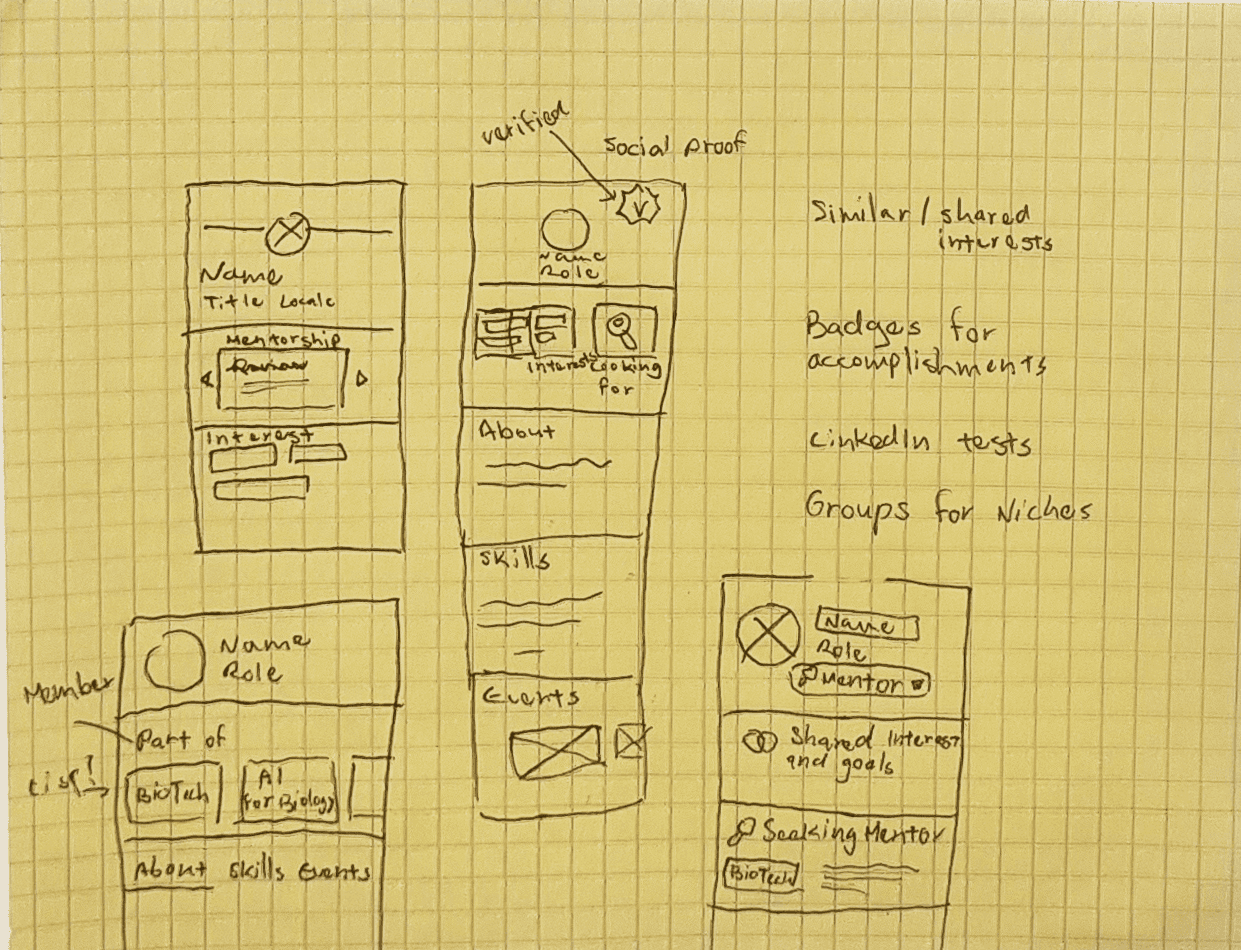
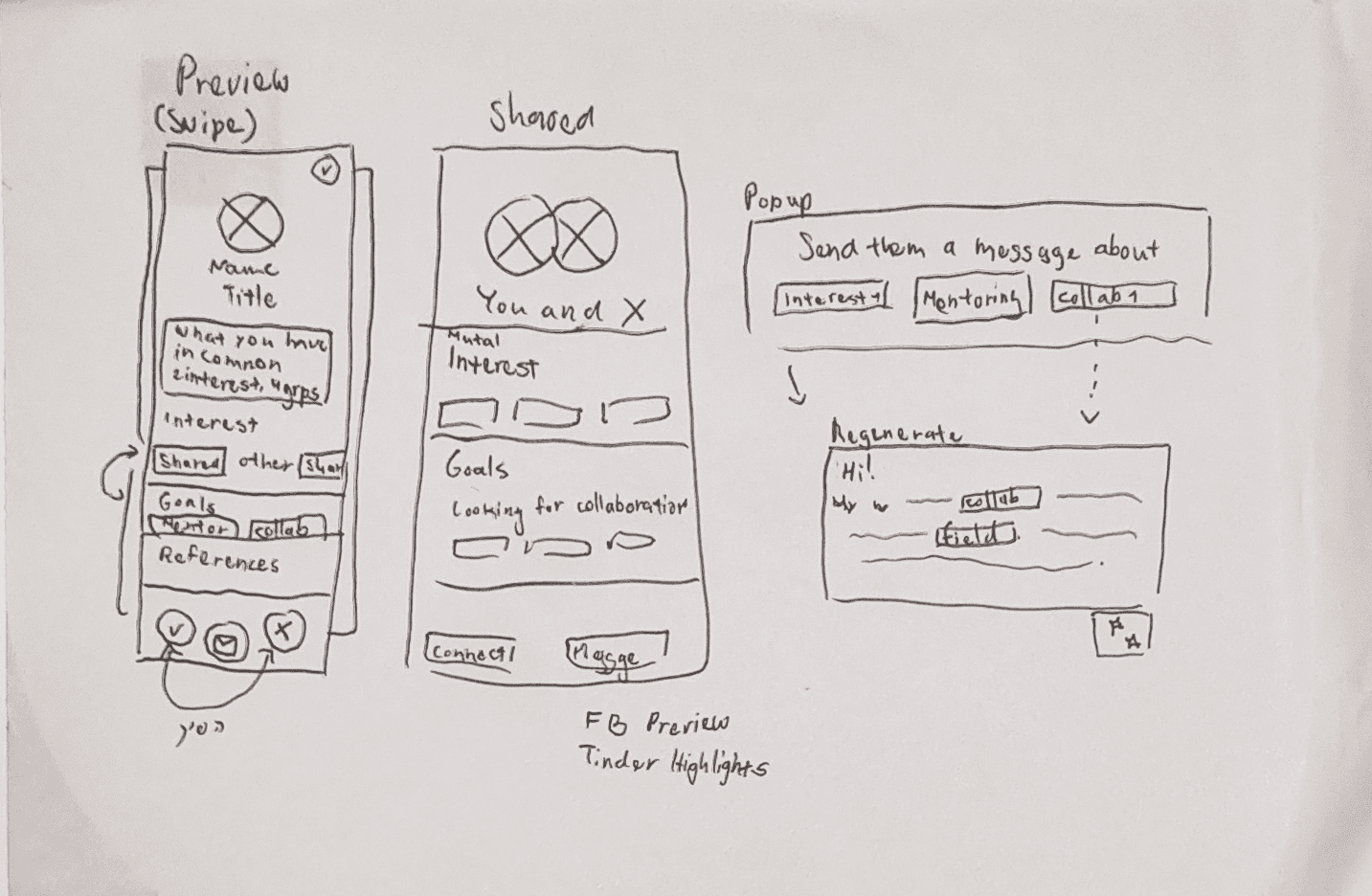
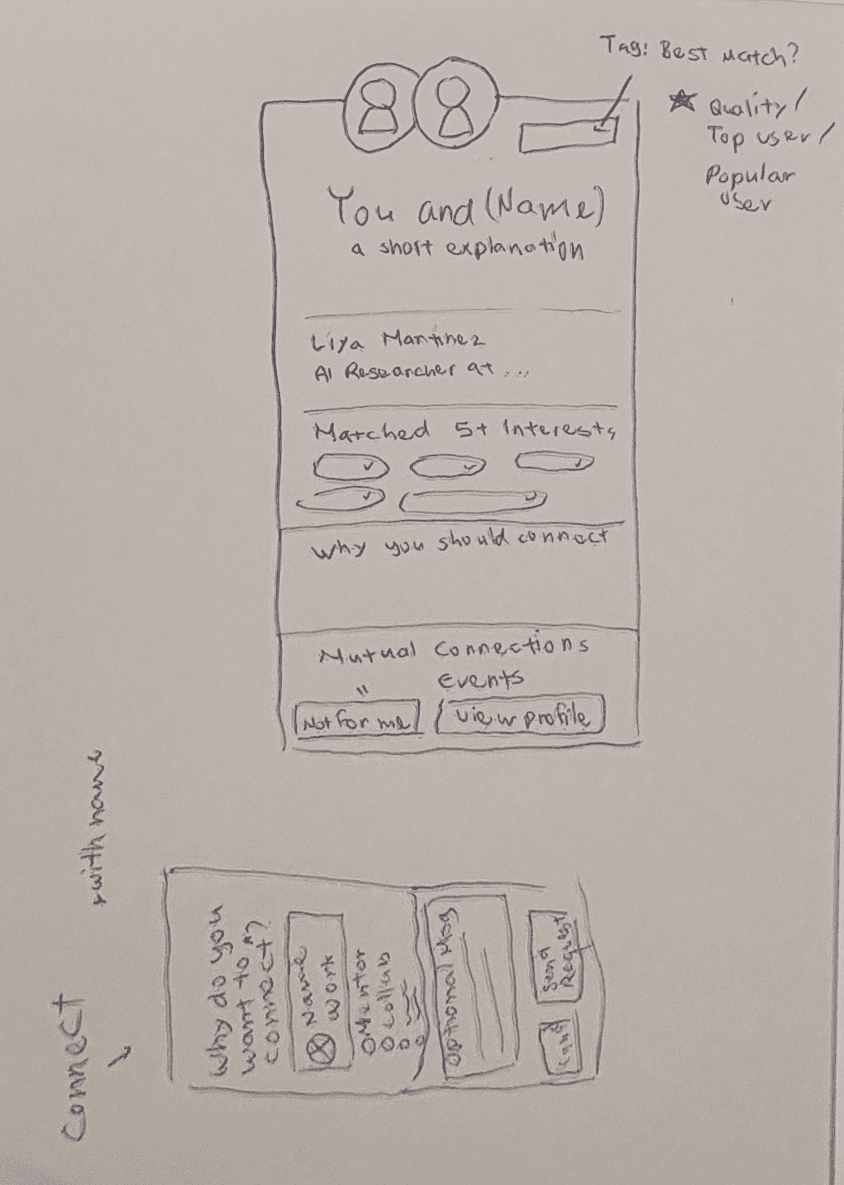
Before diving into high-fidelity designs, I sketched multiple low-fidelity wireframes to quickly explore layout ideas and user flows. This helped me iterate efficiently and validate key interactions before committing to digital wireframes
Deliver: High-Fidelity Screen





What I learned and what’s next
Lessons Learned
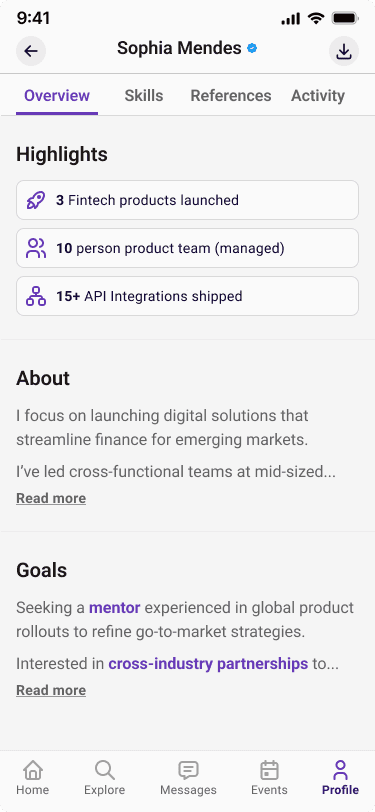
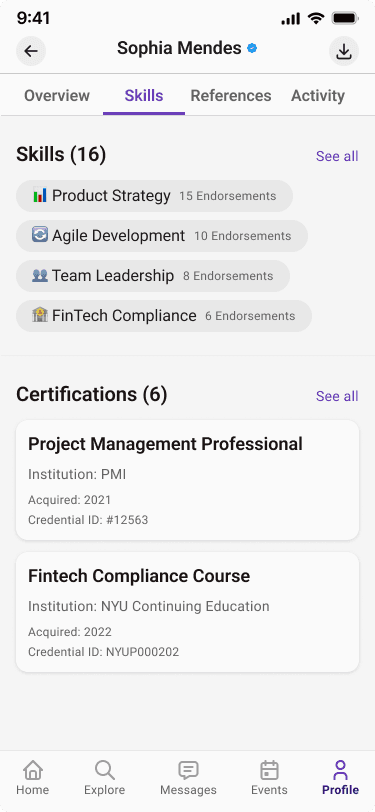
The hardest constraint was deciding what information actually justified a connection. From the interviews, users consistently ignored job titles and instead looked for proof of specific technical experience (e.g. “built a payment gateway”, “fought fraud at scale”).
This forced a clear hierarchy on the profile:
Shared goals / intent first
Concrete technical highlights second
Job title and company de-emphasized
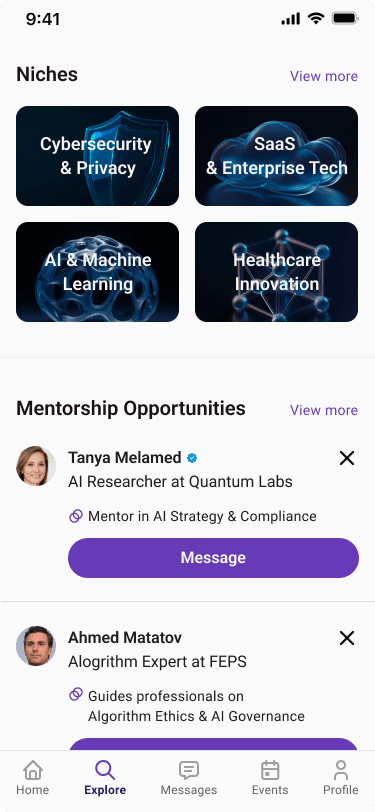
That decision directly shaped how search, explore, and matching worked - they filter and rank on goals + technical signals instead of vanity metrics.
What’s Next?
Given more time, the first thing I would do is test the profile and matching screens with a few people from fintech or biotech. I want to see whether putting technical signals and shared goals first actually makes them more likely to start a conversation, instead of just scrolling past.
I would also design better follow-up after events. Right now it’s too easy to meet someone interesting and then lose the connection a day or two later. Simple reminders or light prompts could help turn those first chats into real ongoing conversations.